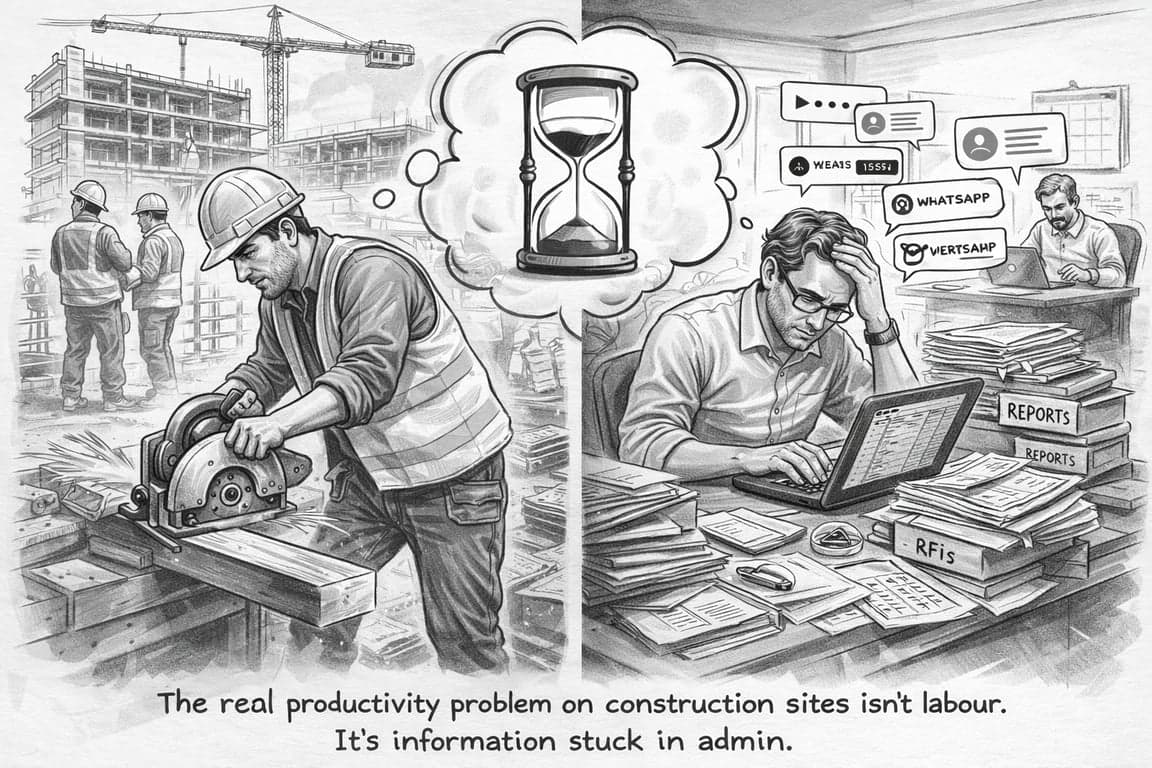
Recently, I spoke with a friend who manages a large utility infrastructure portfolio serving residential communities across Kuala Lumpur.
His team oversees:
More than 30 locations
More than 500 utility and water-related assets
Hundreds of customer accounts
Monthly billing and collection operations
These assets include water meters, pumps, pipelines, and supporting infrastructure that keep essential services running every day.
Despite the scale of the operation, much of the monthly billing and collection process is still managed through:
Microsoft Excel spreadsheets
Printed forms
WhatsApp messages
Manual follow-up calls
Hardcopy files
At first, this may seem like a normal way of working.
But when you step back and look at the scale of the operation, one question naturally comes to mind:
How can an organization managing more than 30 sites and 500 assets still rely heavily on spreadsheets and paper-based processes?
That conversation reminded me that many organizations are running large and critical operations using tools that were never designed to scale.
The Hidden Cost of Manual Processes
Most businesses underestimate how much time and money is lost through manual work.
When teams depend on Excel and paper, common issues include:
Re-entering the same data multiple times
Human errors
Missing records
Slow billing cycles
Delayed collections
Limited visibility
Difficulty scaling operations
Excel is an excellent analytical tool.
But Excel is not an operational platform.
Once your organization manages hundreds of assets, spreadsheets become a workaround rather than a sustainable system.
What the Monthly Workflow Looks Like
Each month, his team typically performs the following tasks:
Visit each site to record meter readings.
Write down the readings manually.
Transfer the data into Excel.
Calculate consumption and charges.
Generate invoices.
Send bills to customers.
Follow up on overdue payments.
Update collection status.
Prepare reports for management.
Now imagine repeating this process across:
30+ locations
500+ assets
Hundreds of accounts
Thousands of transactions
The administrative effort is substantial.
And every spreadsheet introduces another opportunity for errors and delays.
A Simple Question
I asked him one question:
What if all of this could be managed in a single web application?
That question changed the conversation.
Because once you visualize the process digitally, the inefficiencies become impossible to ignore.
The Digital Opportunity
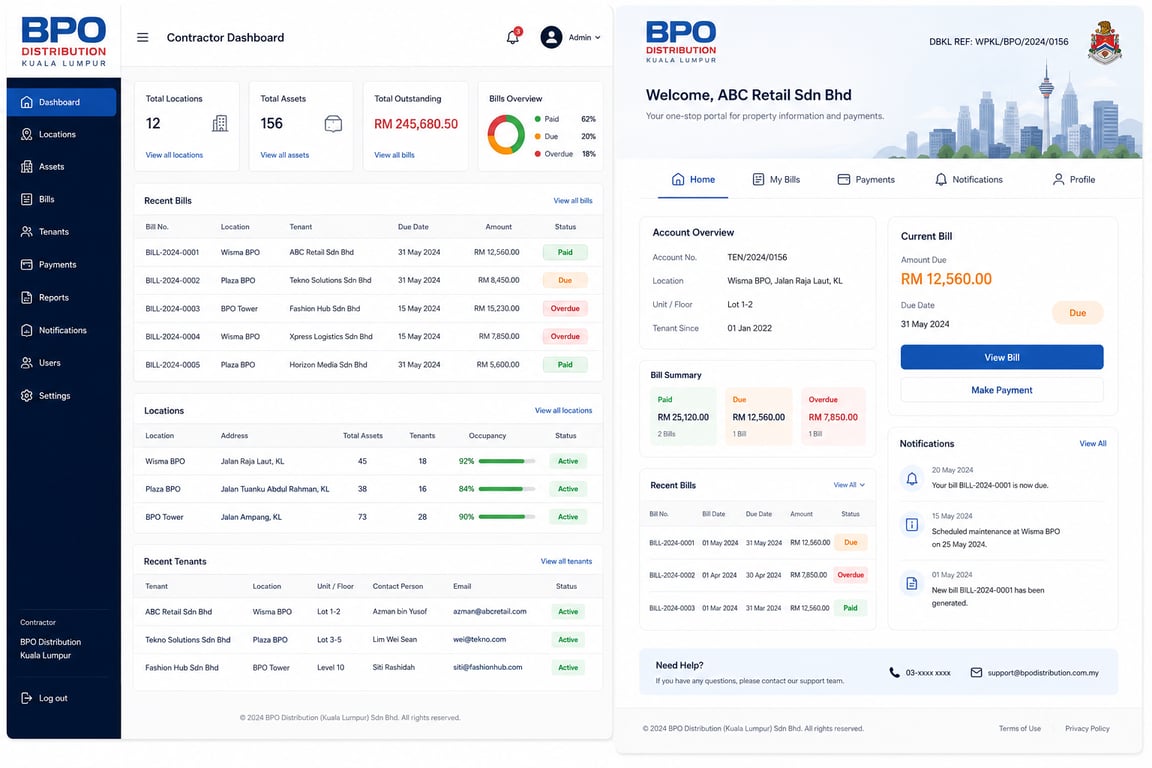
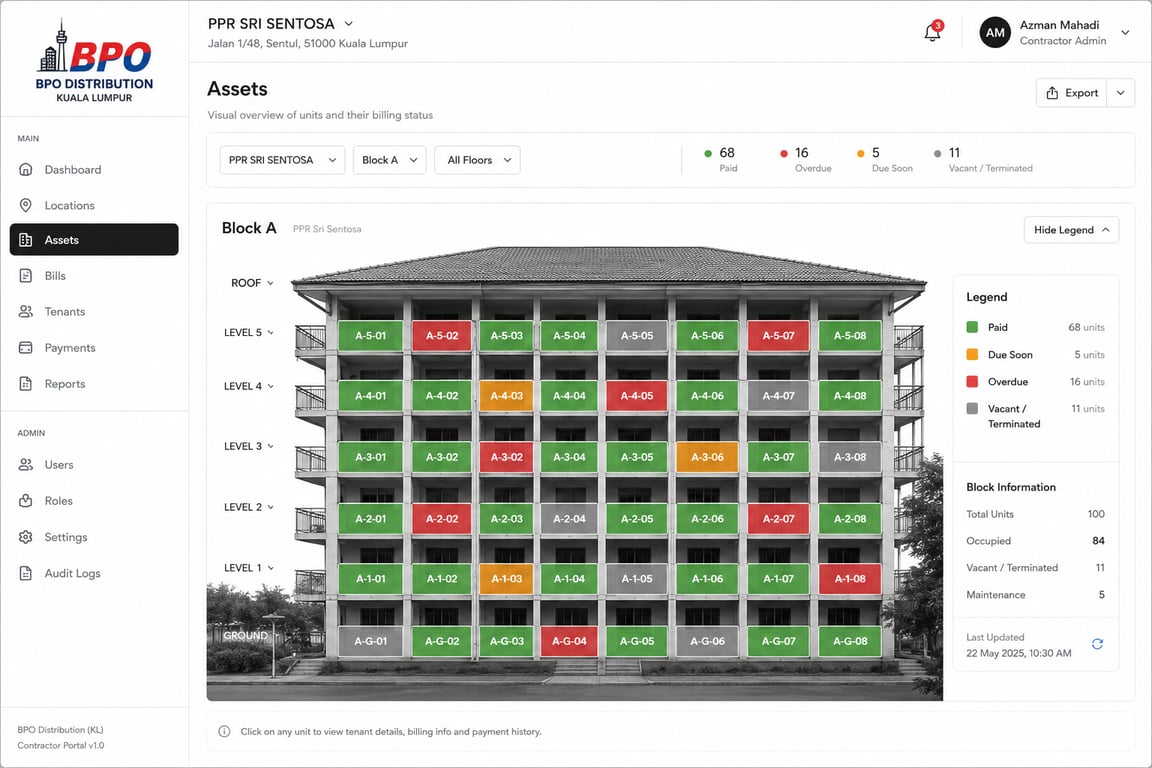
Instead of relying on disconnected spreadsheets and paper files, the entire workflow could be centralized in a custom web-based platform.
Such a system could include:
Asset Management
Sites, buildings, and asset registers
Equipment details and status
Ownership and customer information
Meter Reading Management
Mobile-friendly data entry
Historical usage records
Validation checks
Automated Billing
Consumption calculations
Tariff application
Invoice generation
Collection Tracking
Outstanding balances
Payment reconciliation
Aging reports
Dashboards and Reporting
Revenue summaries
Collection performance
Consumption trends
Document Management
Invoices
Receipts
Supporting documents
Alerts and Notifications
Overdue accounts
Unusual consumption patterns
Missing readings
Digitalisation Is the Foundation for AI
The real value is not just replacing Excel.
The real value is creating structured data that can later be enhanced by artificial intelligence.
With a proper digital platform, AI can help:
Detect abnormal usage patterns
Predict payment delays
Generate monthly reports automatically
Answer management questions
Draft follow-up messages to customers
Tools such as OpenAI, Claude by Anthropic, Hermes by Nous Research, and OpenClaw on GitHub are making this increasingly accessible.
Digitalisation creates the data. AI turns that data into intelligence.
The Same Challenge Exists Everywhere
This issue is not limited to utility management.
The same situation exists in:
Construction project monitoring
Facility management
Asset maintenance
Property management
Finance and collections
Operations management
Many organizations still rely on:
Excel trackers
Email chains
PDFs
Printed forms
Manual approvals
The underlying problem is the same.
Information is scattered, repetitive, and difficult to manage.
A Thought-Provoking Question
If your team spends hours every month:
Copying information between spreadsheets
Searching for hardcopy documents
Chasing payments manually
Preparing repetitive reports
Ask yourself:
Are your people doing high-value work, or are they acting as human middleware between disconnected systems?
The Future Belongs to Structured Data
The companies that will lead in the coming decade are not necessarily the largest.
They are the ones that:
Organize their data properly
Digitize core workflows
Automate repetitive tasks
Integrate AI effectively
Digitalisation is no longer a luxury.
It is a strategic advantage.
Final Reflection
What began as a simple conversation with a friend revealed a challenge that many organizations still face.
The issue was not a lack of capable people.
The issue was the system they were using.
When critical operations remain manual, growth becomes harder, errors become more common, and valuable time is wasted.
But with the right digital platform, even a complex process involving hundreds of assets and thousands of transactions can become streamlined, transparent, and intelligent.
Sometimes transformation begins with one simple question:
If we were designing this process today from scratch, would we still choose Excel and paper?
For most organizations, the answer is obvious.