 A few years ago, I watched a G7 contractor spend a significant sum on a construction management platform. Full deployment — document control, quality management, RFI tracking, the works. The sales pitch was compelling. The demo was impressive. The implementation team flew in from overseas.
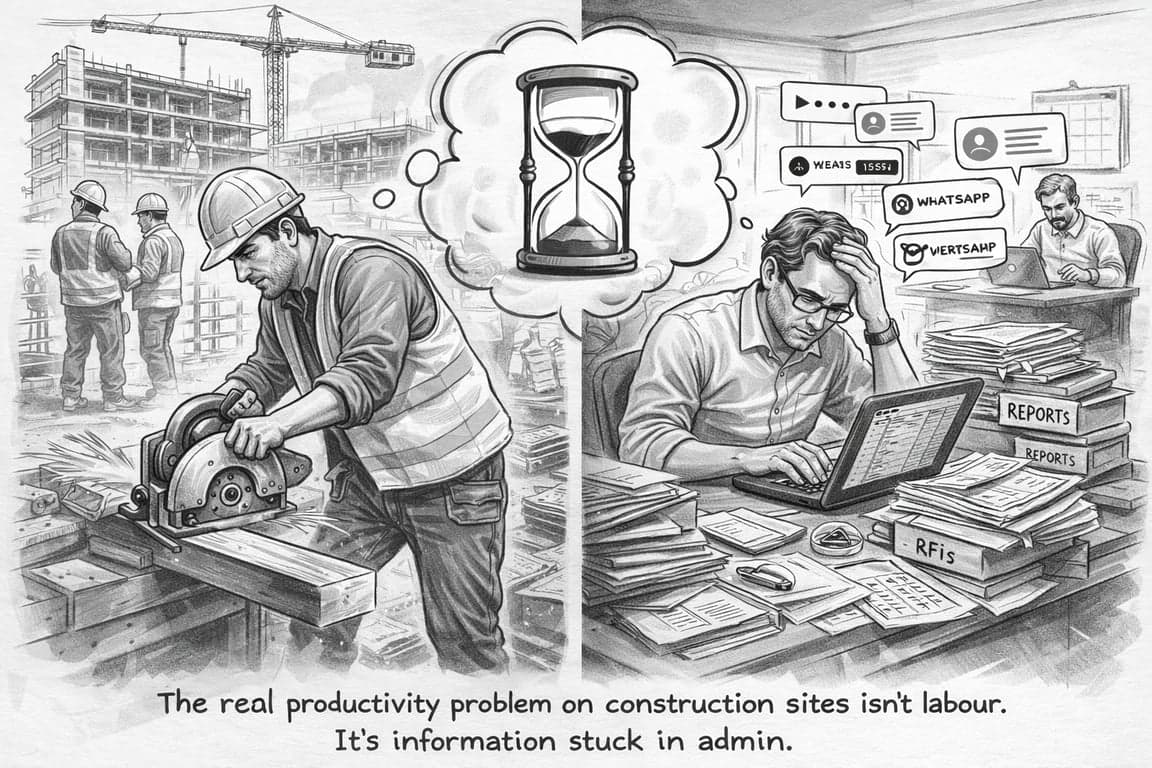
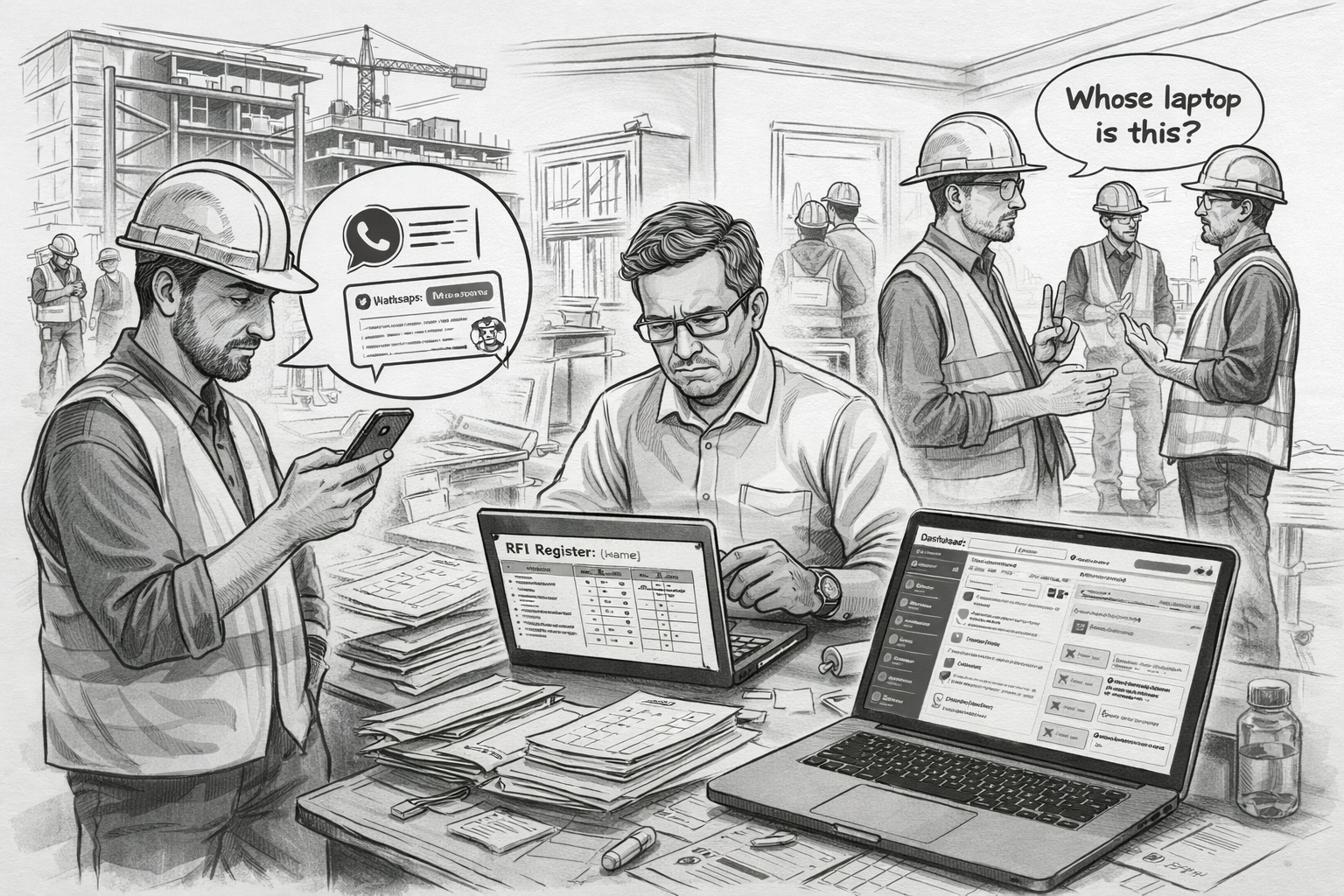
Six months later, the team was still using WhatsApp to distribute drawings.
The software was open on someone's laptop. It was technically being used — for filing. The RFI register in the system was about three weeks behind the actual RFIs being tracked in a personal Excel file on the Document Controller's desktop. Nobody had told the subcontractors to use the portal. The SO had never registered.
I'm not here to name the product. It doesn't matter which one it was. What matters is that this story is not unusual. I've heard versions of it from contractors across different sectors, different project sizes, different geographies.
The software wasn't the problem. And that's exactly what makes this so hard to fix.
Here's what actually happens when a construction team adopts new software.
The system is set up. Training is conducted — usually a half-day session, delivered to people who are already stretched thin, followed by a return to the site where the actual work is waiting. The people who attended the training go back to doing things the way they have always done them, because the old way works and the new way is unfamiliar and nobody has time to be unfamiliar right now.
The platform sits alongside the existing workflow instead of replacing it. It becomes a parallel track — the official record that nobody updates in real time, and the unofficial record (WhatsApp, Excel, paper) that actually runs the project.
Two records. Double the work. Zero improvement in outcomes.
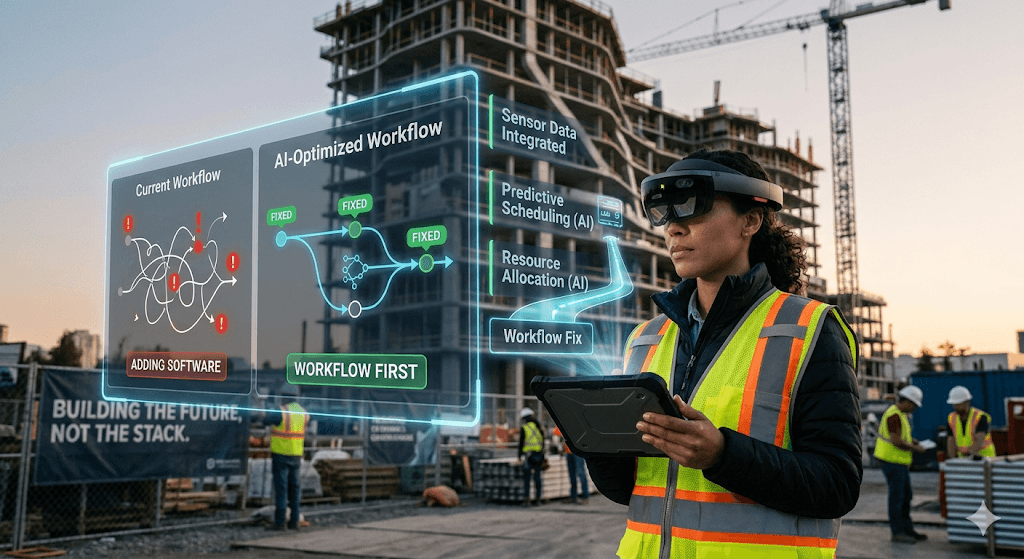
The mistake isn't buying the software. The mistake is believing that the tool is the intervention.
Construction teams don't resist new systems because they're stubborn or old-fashioned. They resist them because most new systems ask people to change how they work — and change, in the middle of a live project, is a cost. Every minute spent navigating an unfamiliar interface is a minute not spent managing the project. Every time the system is slower than sending a WhatsApp, someone will send a WhatsApp.
You cannot solve a habits problem with a features problem.
The question isn't "does this software have an RFI tracking module?" The question is "will a site engineer actually use it at 7am, in the sun, on a phone with 40% battery, after the SO just called about a discrepancy?"
If the answer is no — and for most enterprise construction platforms, the honest answer is no — then the feature set is irrelevant.
What I've come to believe, after spending years on and around construction sites, is that the tools that actually get used are the ones that ask the least of the user.
Not less functionality. Less friction.
A form that works offline. A submission that takes sixty seconds. A notification that arrives on the channel the person already has open. A report that compiles itself from what was already entered.
The foremen and site supervisors at the sharp end of the project are not going to log into a portal. But they will fill a short form on their phone if it's simple enough. And when that form is connected to an automation layer that handles everything downstream — logging the record, notifying the right people, generating the document, updating the register — something meaningful has changed.
Not because a new system was imposed. Because the existing habit was captured and made to do more work.
This is the approach I take when I work with construction teams on workflow automation. We don't start by looking at what software to buy. We start by mapping what the team already does — every daily form, every WhatsApp update, every Excel register — and asking which parts of that process could run automatically if the right trigger was in place.
Most of the time, the answer is: most of it.
The daily report that takes the PM forty-five minutes to compile from scattered messages — automated. The NCR that gets raised on paper and sits in a folder until the SO audit — replaced with a mobile form that notifies the subcontractor, tracks the deadline, and escalates if it's not closed. The monthly progress report that takes two days to pull together — drafted overnight from data that was captured automatically throughout the month.
Same outputs your team was producing before. A fraction of the manual effort. Built on Google Workspace and WhatsApp — tools the team is already using.
That is not a software implementation. It is a habit system with the manual work removed.
The most effective construction operations I've seen didn't have the most sophisticated software. They had the most disciplined habits — and someone had the foresight to build simple systems around those habits so they couldn't break down.
So the real question isn't which platform to buy. It's: what are the habits on your site that are worth keeping — and what would it take to make them automatic?
I've found that when teams start asking that question instead of browsing software demos, they end up with something that actually gets used.
That, to me, is a more honest place to start.